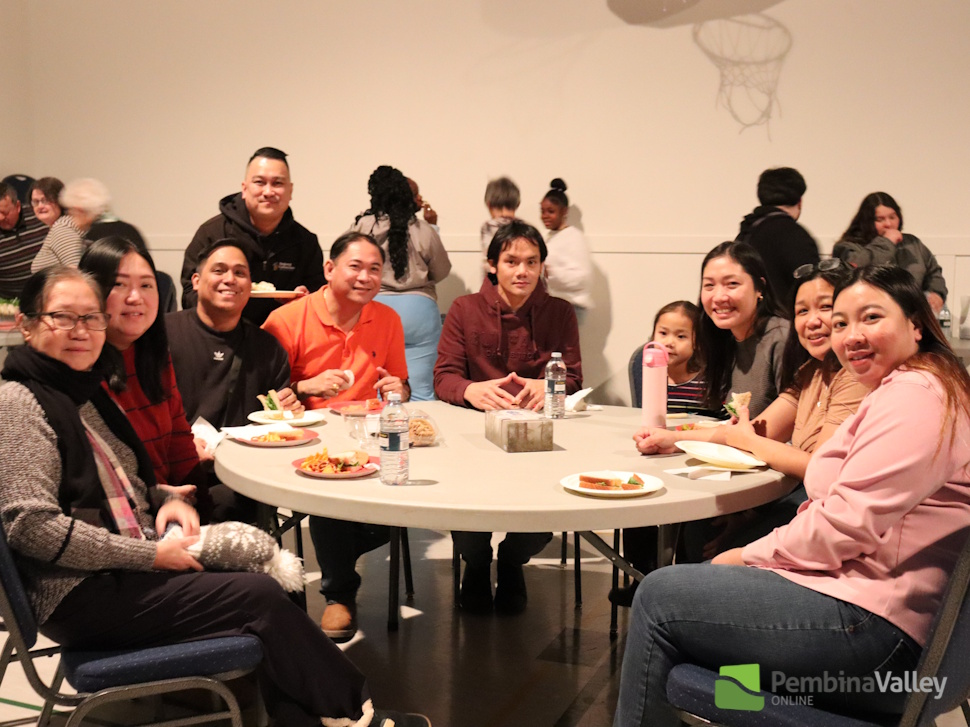
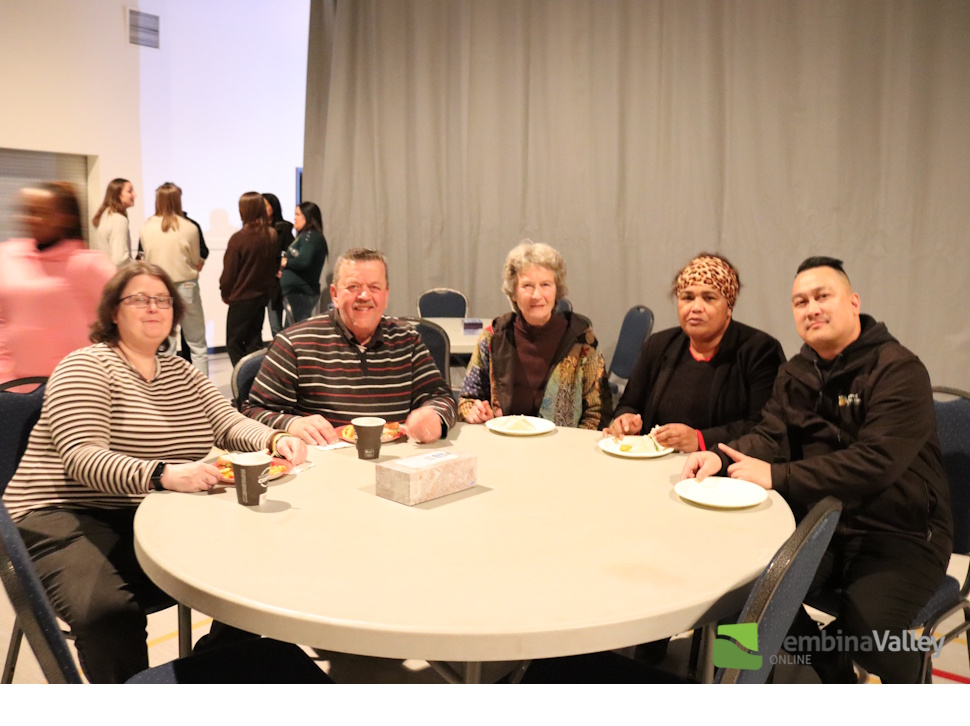
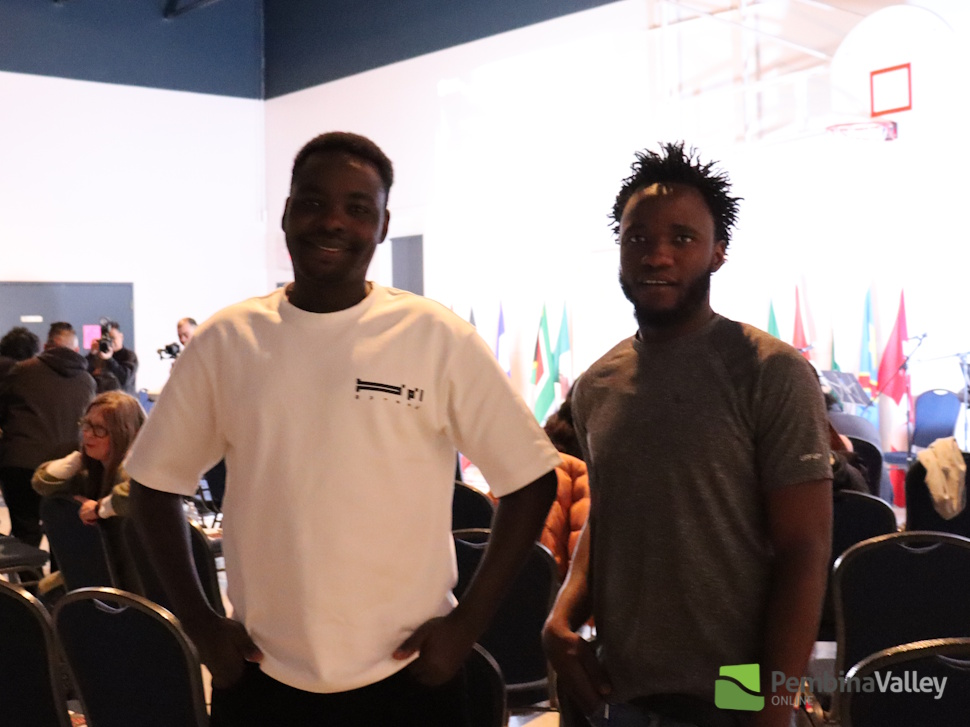
An intimate gathering took place Saturday night at the Westside Community Church as people leaned in to hear eleven stories from local refugees who have escaped dangerous conditions in their home countries and found asylum here in Canada.
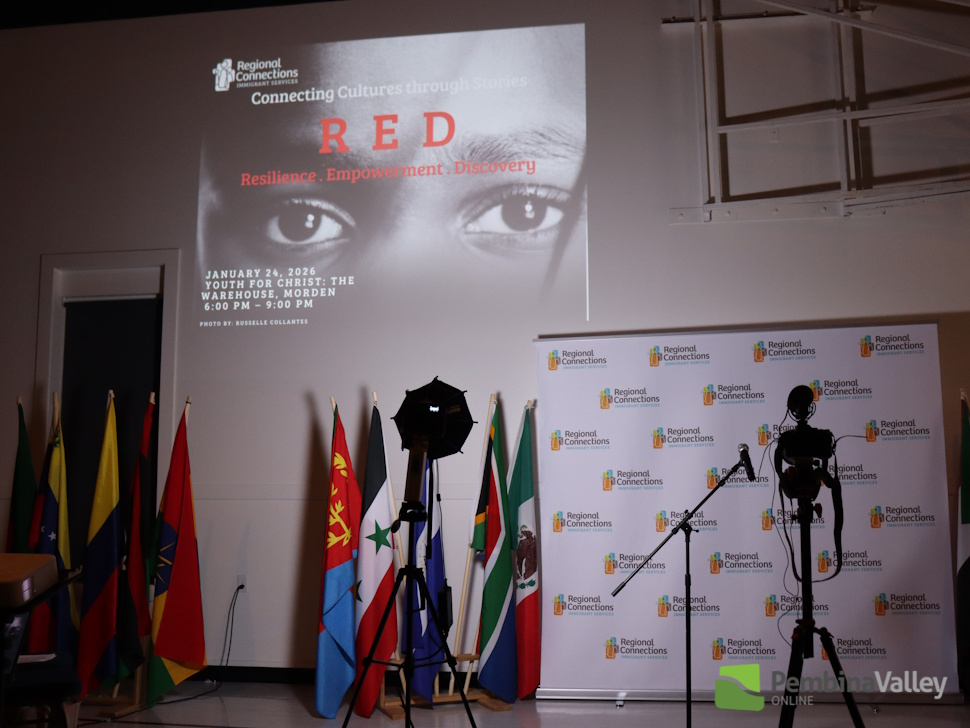
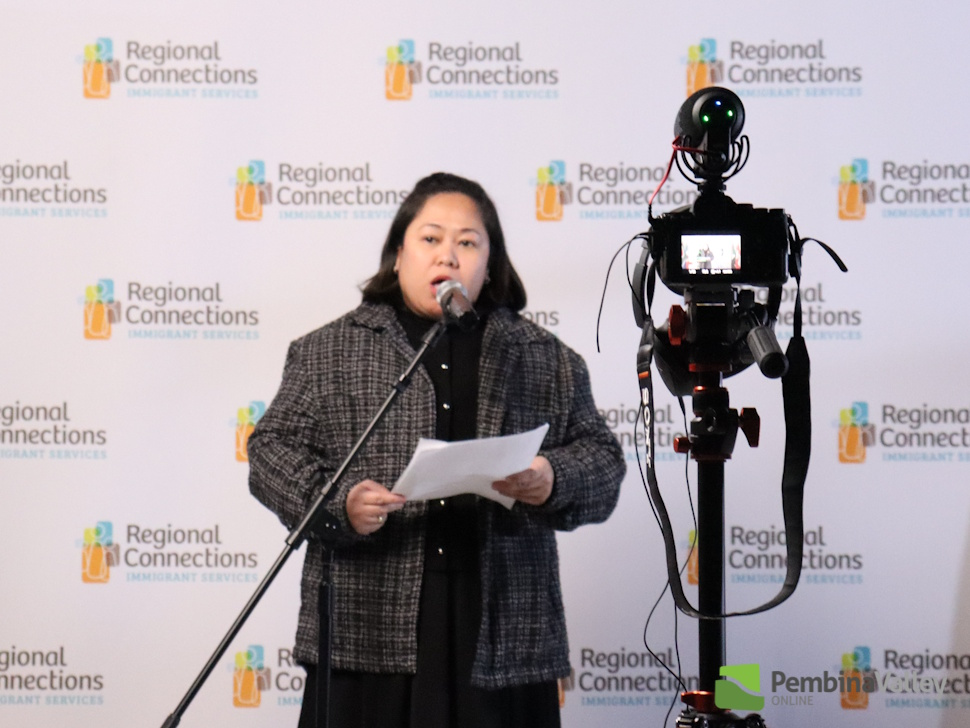
Regional Connections Resettlement Assistance Program (RAP) Coordinator Russelle Collantes explained why the event was called RED.
“RED stands for Resilience, Empowerment, and Discovery. It’s based on our previous event. We showcased blue ribbons to show what our refugees think or their perspectives. We used blue ribbons because it’s a colour of hope. This year, we just thought that from their perspective, now living the life here in Canada.”
The RAP program has seen significant growth in three years.
“In our first year, it was 50 clients, and then in the second year we were it was increased by 110, and this year. we received 125 clients.”
Not all stay in the area, as some move to be closer to other family members who have settled in other parts of Canada.
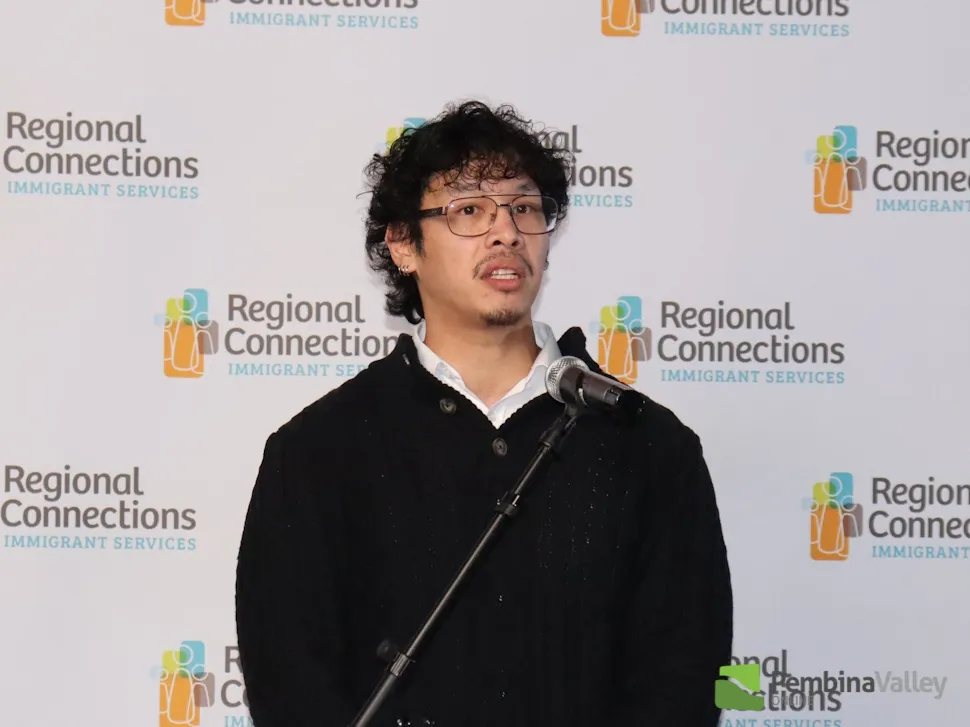
Regional Connections Resettlement Assistance Program (RAP) Coordinator Russelle Collantes
Collantes explained what finding a new life in Canada means for each refugee.
“They’re showcasing resiliency, and other clients actually found employment. We were surprised they’re going to English classes, driving their own vehicles. They are showing empowerment and then also discovery. Discovery that they can actually start a new beginning here in our area, that they don’t need to run away. No one’s hunting them.”
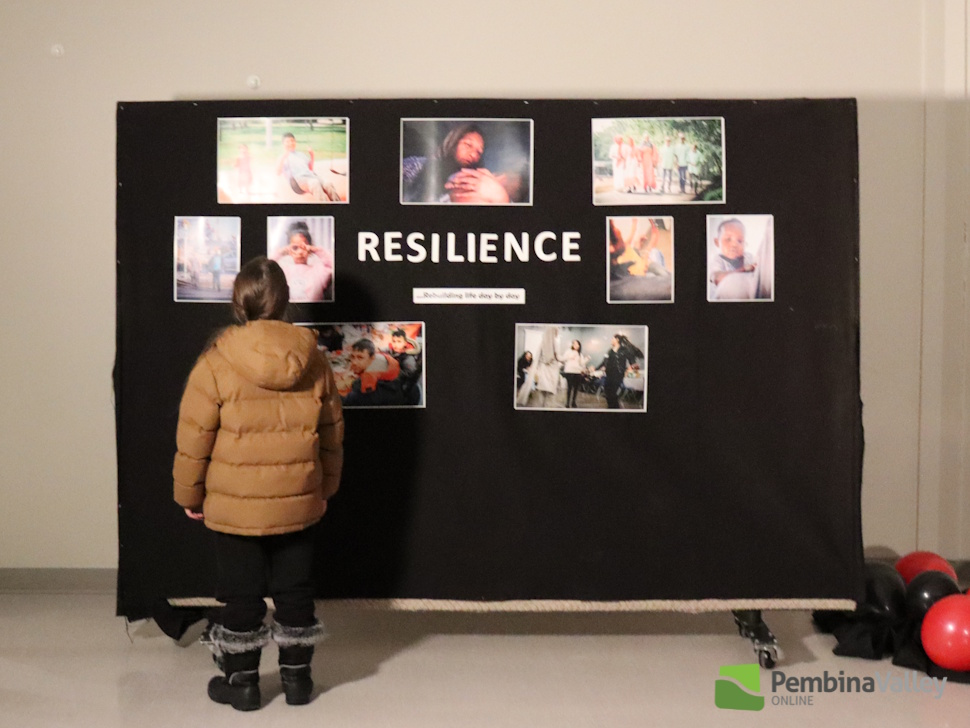
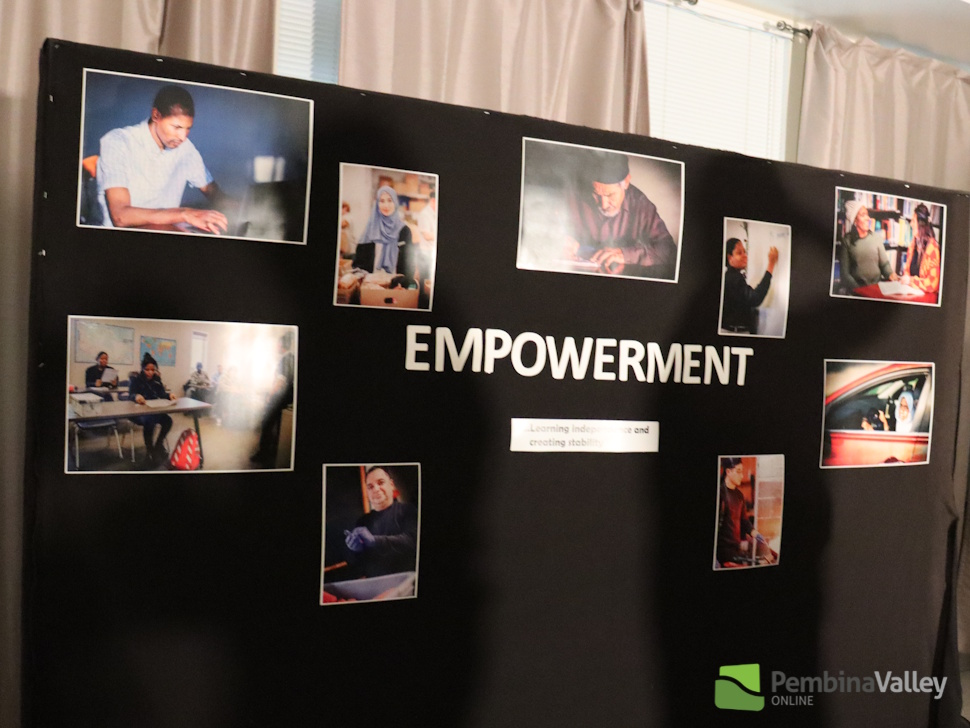
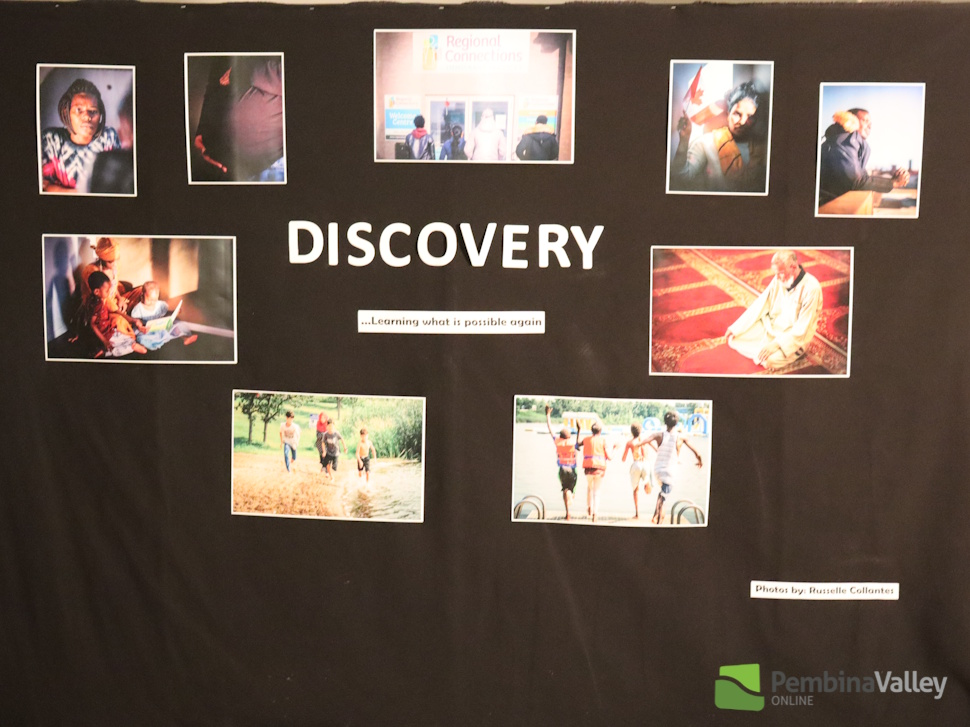
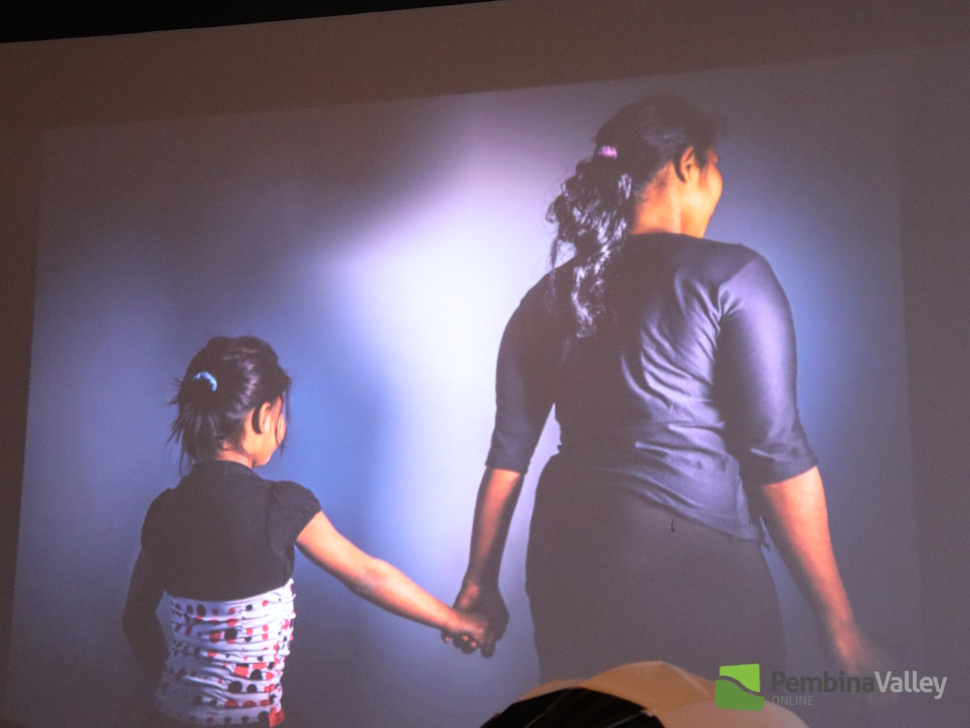
As you walked into the first room, three walls with the three words displayed pictures of clients in the program, taken by Collantes.
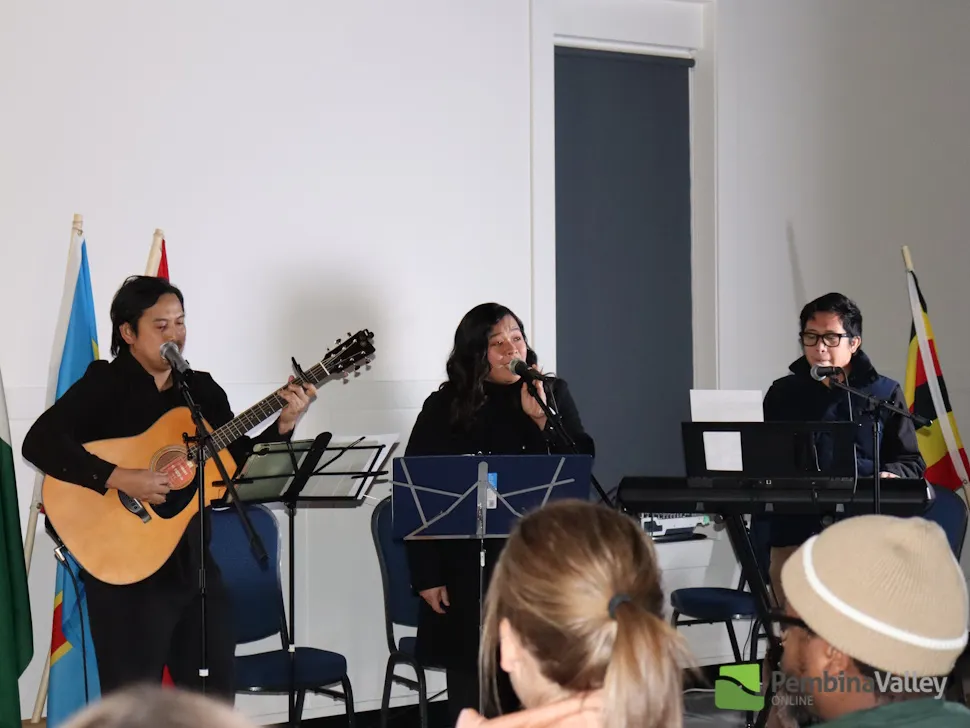
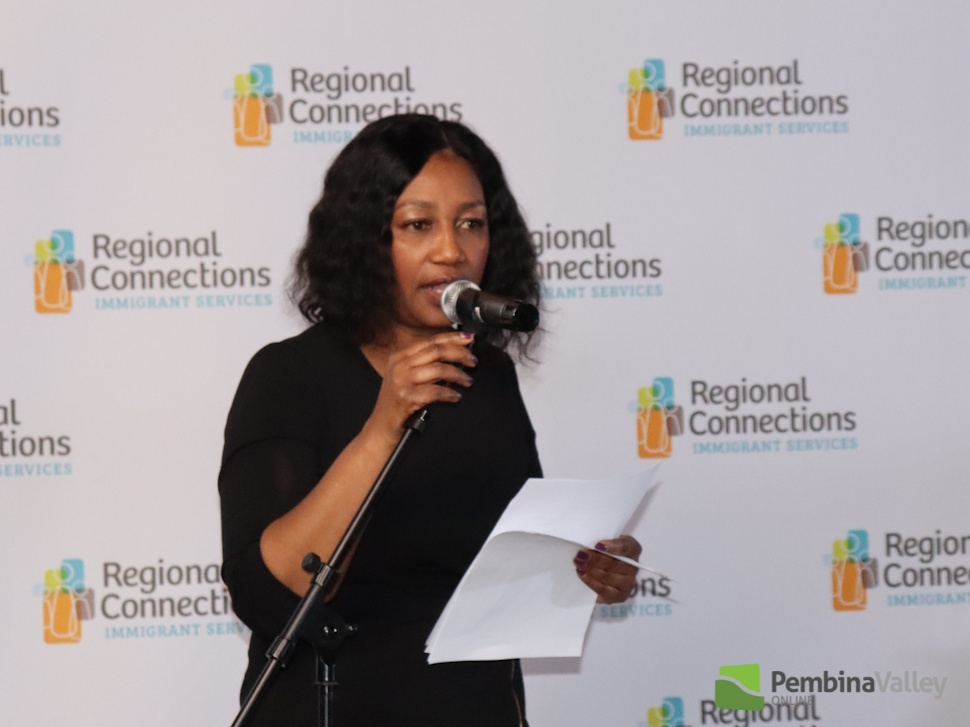
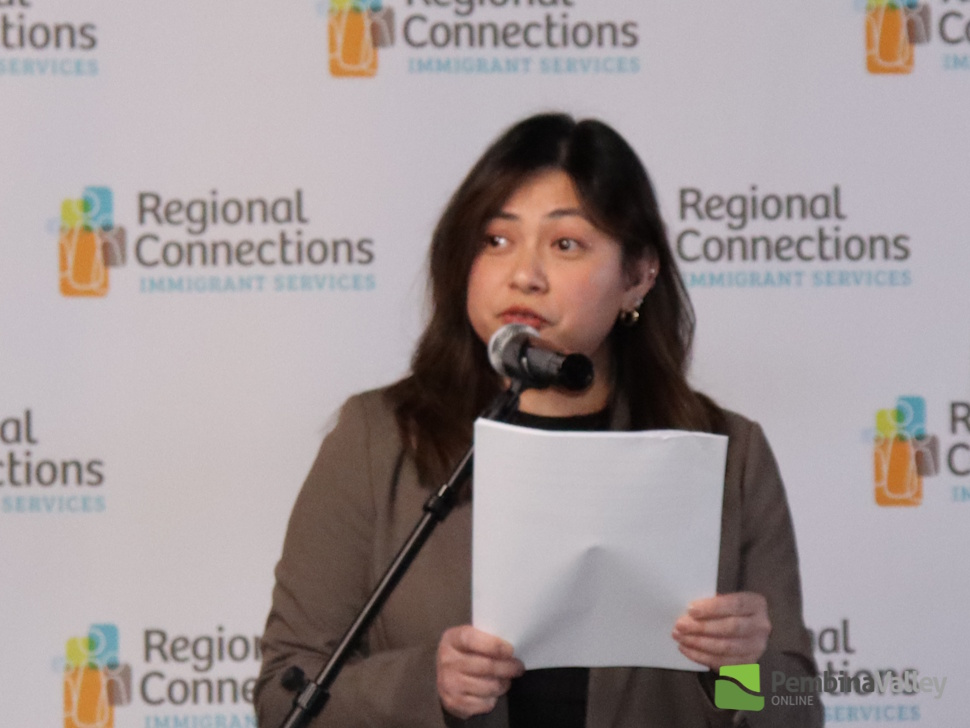
The program had two readers who took turns reading each story. After each story, a trio sang a song that paired well with it, to give time for the audience to process and reflect on each one. Kleenex was provided to catch tears shed after each moving account.
It was a night aimed at building awareness, according to Collantes.
“If you would notice on social media, the narrative is very different. It’s like labeling or assuming. Sometimes it’s negative. So, we thought that it would be nice to share the real-life stories of people coming from the people, not just in general. To share it with the community so that people from the community would really understand their personal experiences in life, the struggles that they face.”
Listeners could soon hear some common themes throughout the night.
“Common themes are fear,” Collantes outlined, “Like they’ve being hunted because of their skin, their faith, or because of war. They grew up in war. Hearing gunshots is being normalized in their area as a kid.”
Each one had a turning point when they found out they had received asylum in Canada.
“They also share that when they come here, they were really surprised by the warm welcome, the warmth of the community, our community, the kindness that has been shown to them, the respect and the dignity that they receive, which they haven’t experienced it from before. All of those things are very new to them. They didn’t really expect that they can still be treated as a human coming here to Canada.”
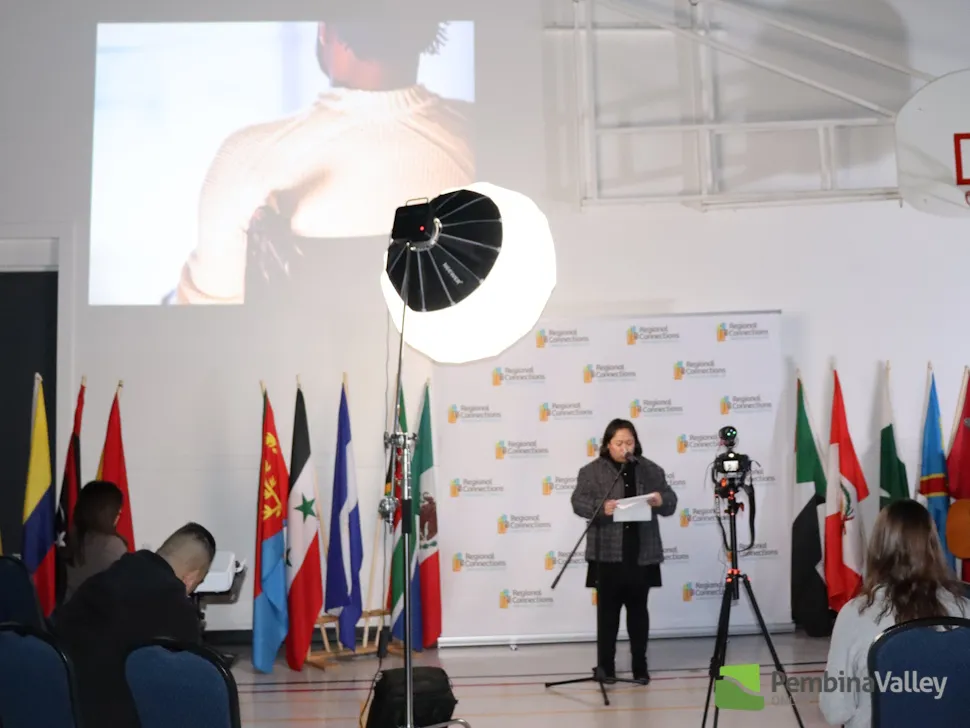
As the music began to play, the stories all ended with one theme: hope.
“All of them really lost hope already. And then upon arriving here, it’s like, ‘Oh, it’s still okay for me to hope,’ and then realizing that there is still hope in this world.”
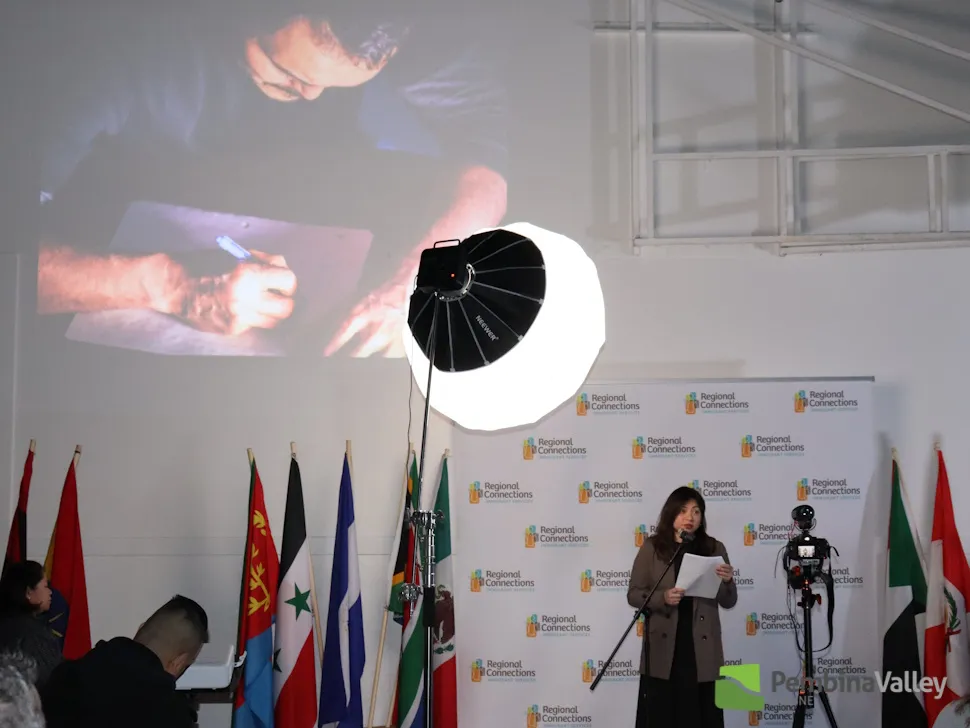
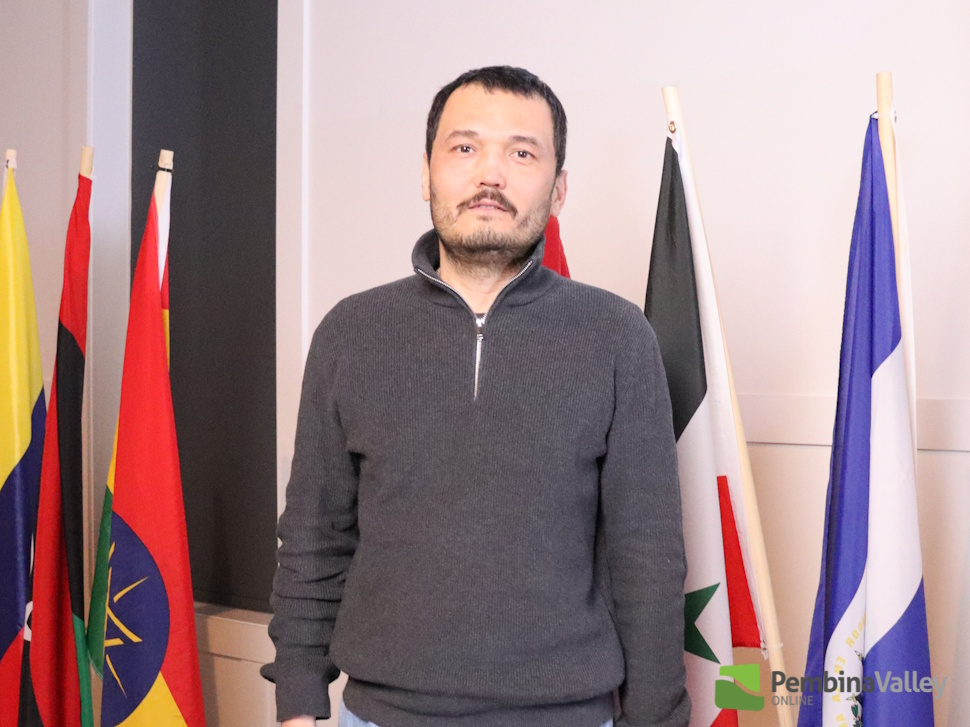
Stories were told from around the world, from Uzbekistan and Trinidad to Darfur, Sudan, and Uganda. Some stories did not share the location, but each one deeply connected the listener to the unknown refugee, which is exactly what Collantes hopes happened.
“I hope that in this event we could build more understanding and compassion for our refugees. When hearing these stories, compassion begins to grow. So, I hope the attendees could share this with their friends, because there are some people who I’ve talked to, who were surprised and mentioned they didn’t know that this was happening. It’s very, very unreal because they grew up in a safe place. Maybe it’s going to be an eye-opener that in other places in the world, these stories really happened. And we are really fortunate enough for us to be here. We are very grateful and fortunate that we didn’t experience those kinds of trauma.”
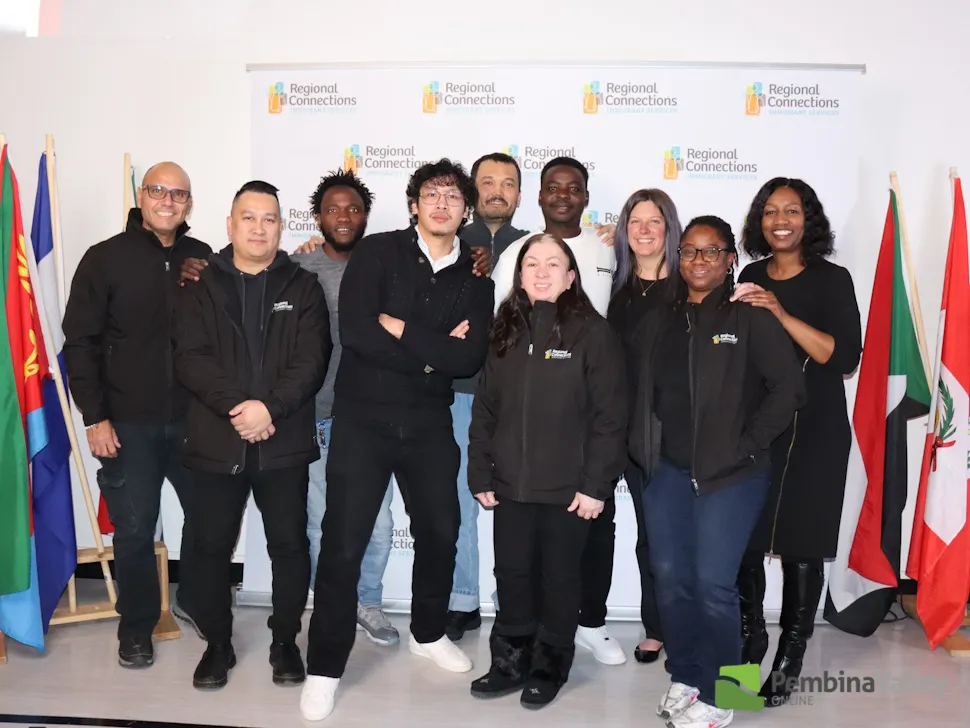
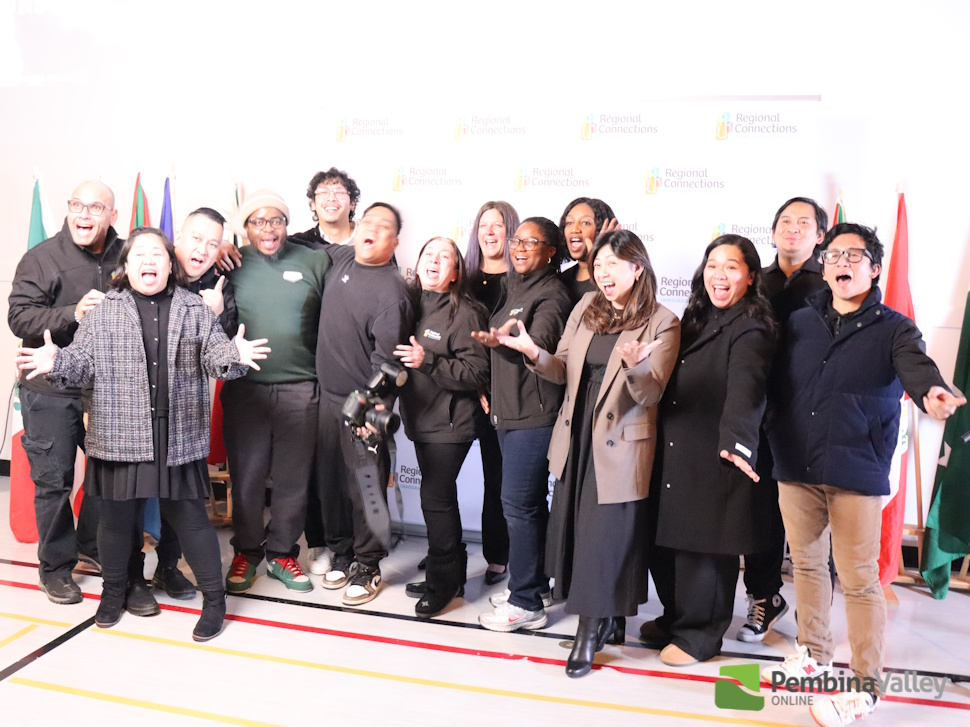
Regional Connections provides services in multiple communities in rural Manitoba.
Regional Connections has 15 locations throughout Manitoba offering a variety of services.


Additional Programs: