
The social and economic benefits of welcoming people forced to flee
One thing that unites them is the overwhelming desire to rebuild their lives. Like anyone else, they want to move forward, find a job, see their kids go to school and thrive and contribute to their communities. Most arrive with very little and yet they bring so much to this country. Their presence strengthens Canada and enriches its economy, culture and communities.
Using data from Statistics Canada along with other sources*, UNHCR Canada has compiled a glimpse of refugee integration in Canada – employment, earnings, occupations and education.
Here’s what it shows:
The stats show the gains refugees have made in this country from coast to coast to coast. It also speaks to the incredible potential refugees possess when Canada offers safety to those who flee. After escaping war or persecution, it is not easy to restart your life in a country like Canada.
We must also acknowledge the important role of governments, municipalities, businesses, schools and civil society in offering opportunities for refugees to find success.
For decades, through changing governments and times, Canada has opened its doors to people fleeing war, violence and persecution in such situations. Whether it was Hungarians in 1956, Asian Ugandans in the 1970s, the Indochinese refugee movement in the 1980s, or more recently, Syrians, Afghans and Ukrainians – Canada has remained a safe haven for refugees, offering hope and a fresh start.
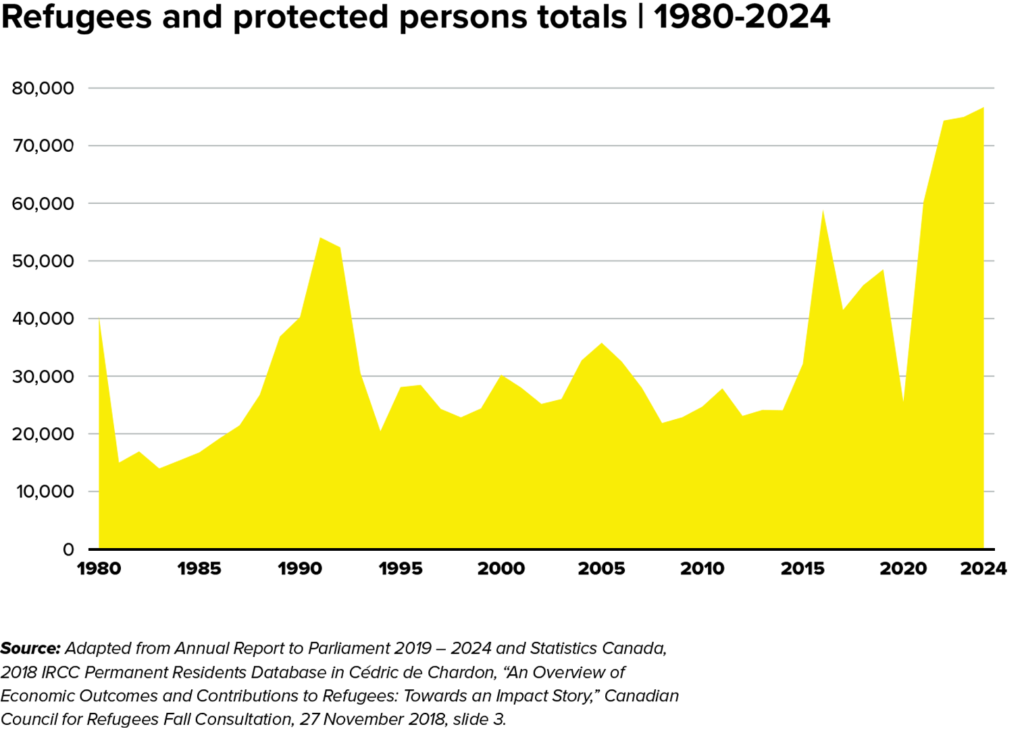
Between 1980 and 2024, Canada has welcomed approximately 1.5 million refugees. This includes those recognized as refugees in Canada or resettled from overseas.
Seeking Employment
Refugees are employed at rates comparable to Canadian-born workers. Year over year, refugees’ employment consistently grows. For those that arrived in Canada before 2010, their unemployment rate is almost the same as that of Canadian-born citizens (10 per cent vs 8 per cent), a clear indication of successful integration.
Refugees have repeatedly shown initiative to earn a living, whether it be by starting small businesses or being self-employed. In both instances, refugees contribute to their communities by paying taxes, contributing to the workforce and providing vital goods and services.
Employment Earnings Grow
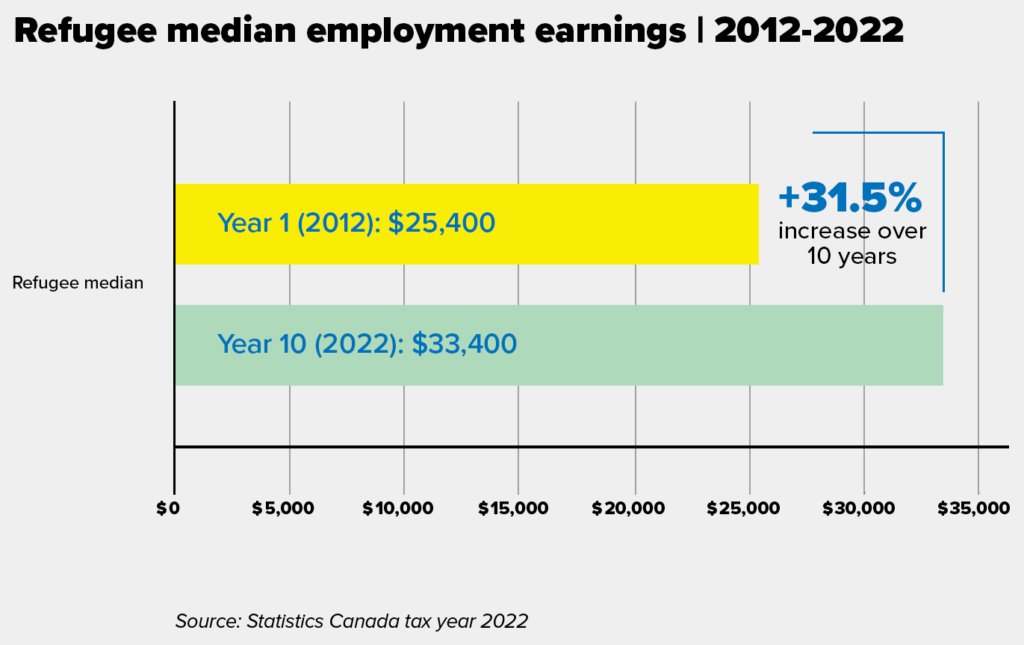
Refugee income grows steadily as individuals establish their roots and progress in their careers. While the initial years of resettlement involve significant transition, the data shows a clear and consistent upward trajectory in economic stability. In their first year after arriving in Canada, the median employment earnings for refugees are approximately $25,400. After a decade of participating in the workforce and integrating into their communities, these median earnings rise to $33,400: a significant increase of 31.5 per cent.
This steady growth highlights the resilience and determination of refugees as they build their lives from the ground up, moving toward the middle class and increasing their contributions to the Canadian economy.
Income Distribution
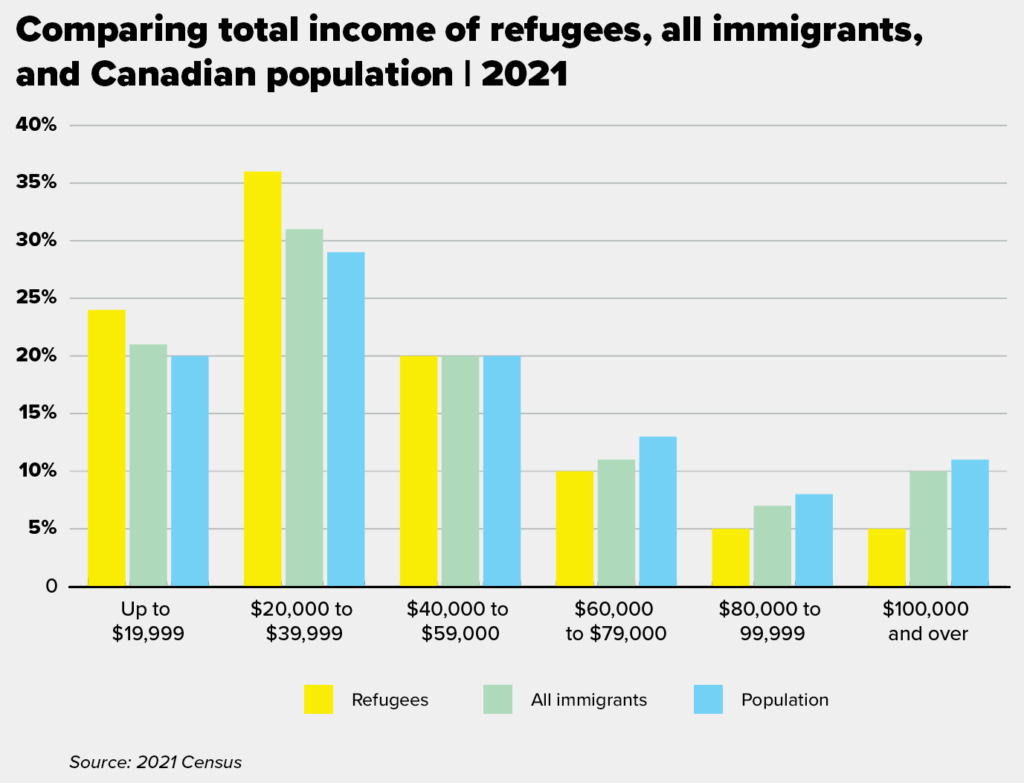
Joining the middle class, 40 per cent of refugees earn $40,000 or more annually. Refugees work hard to improve their financial standing. Many refugees progress from lower income brackets to higher ones – another testament to their growing economic prosperity and integration.
The skilled workforce Canada needs
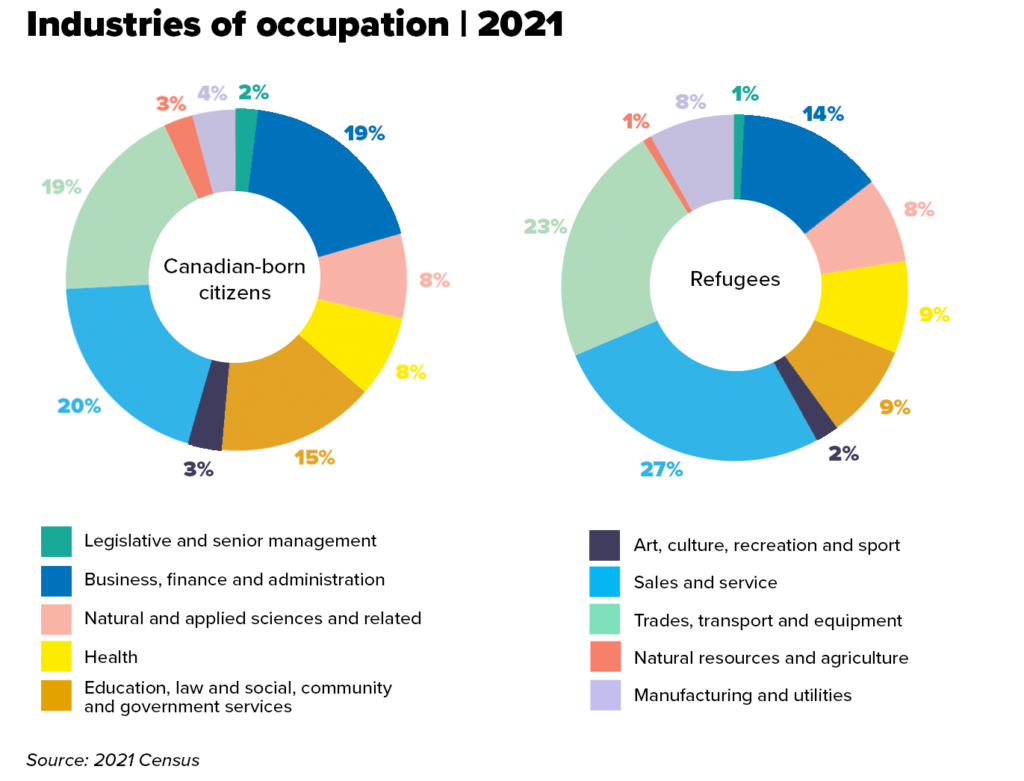
Refugees bring the diverse expertise required to power Canada’s most essential industries. Refugees are more likely than Canadian-born citizens to work in healthcare, trades and manufacturing: roles that are not only in high demand but are also fundamental to the country’s infrastructure and daily life.
While the data categories are broad, a closer look at the National Occupation Classification** reveals that refugees are filling the “backbone” roles of our economy.
By providing the manpower and technical skills for these vital sectors, refugees do more than just integrate into the economy; they strengthen the very systems that support economic growth and community well-being for all Canadians.
Regarding health and trades in particular, the 2024-2033 Canadian government labour market projections identify a number of positions at risk of shortages. This includes in the area of nursing and health support services, positions which refugees like Tekle Mehari are helping to fill to support their community.
Working Age Population
Canada has an aging population. Most refugees come to Canada early in their lives – providing workforce and human capital for many years. A significant percentage of refugees are of working age, able and willing to help Canada’s labour market. This demographic advantage supports the country’s economic growth and sustainability.
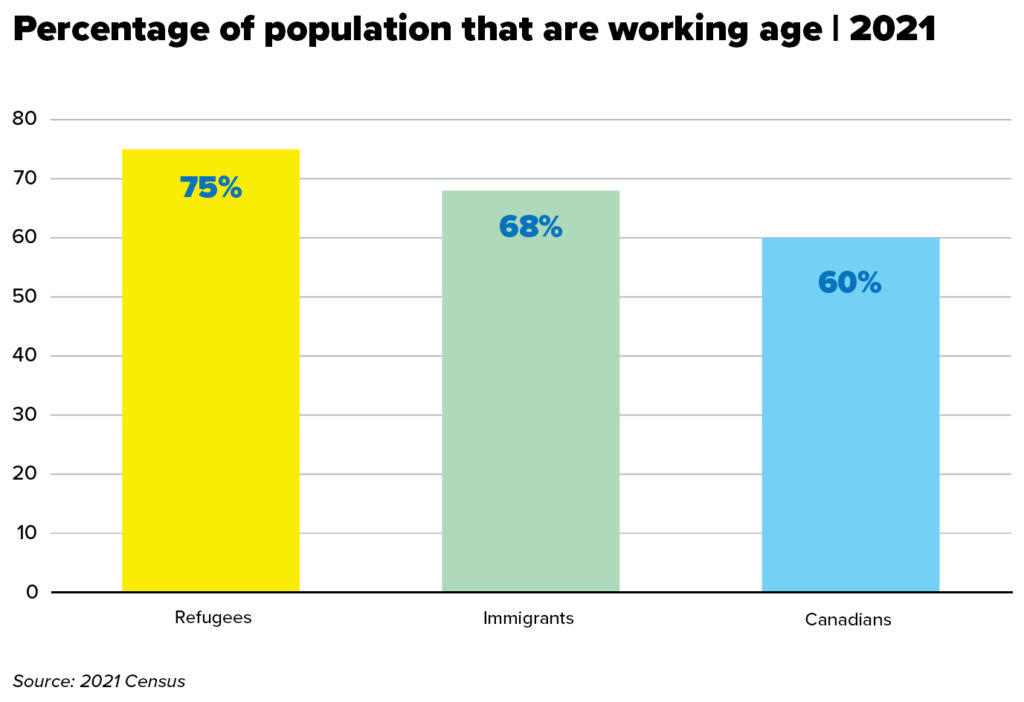
Refugees contribute to the communities in which they live. Canadian communities thrive on a long history of volunteerism and civic participation. Refugees are a central part of this tradition; they don’t just live in their communities, they actively build them. This commitment is most visible in their high rates of citizenship and their dedication to service.
Contributing through community service and volunteerism
According to IRCC Newcomer Outcomes survey data, nearly one in three refugees said they participate in volunteer activities, providing essential support to the neighborhoods they call home.
This participation often happens in the areas where communities need it most:
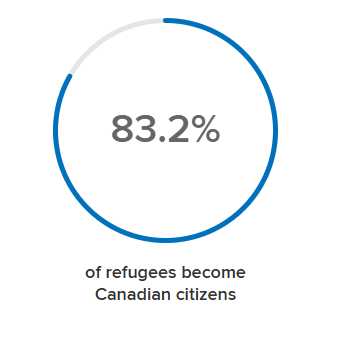
Making the decision to become a Canadian citizen is a very strong statement. It expresses a desire to contribute to this country and fulfill all duties citizenship requires. Citizenship rates for refugees are high – over 80 per cent after three years.
To become Canadian citizens, refugees must live in Canada for at least three years, pay a fee and pass a test on their knowledge of Canadian history, geography, economy, government laws and symbols, as well as file taxes and demonstrate English or French language skills.
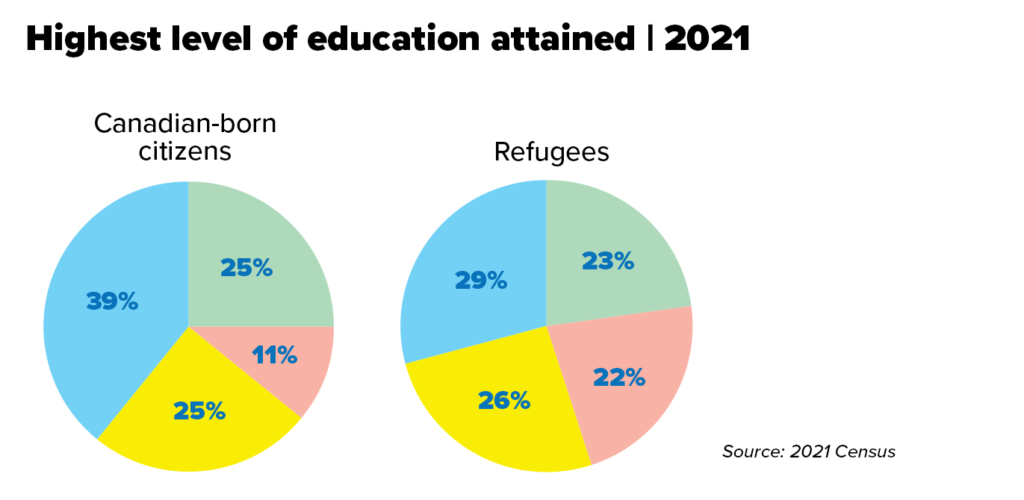
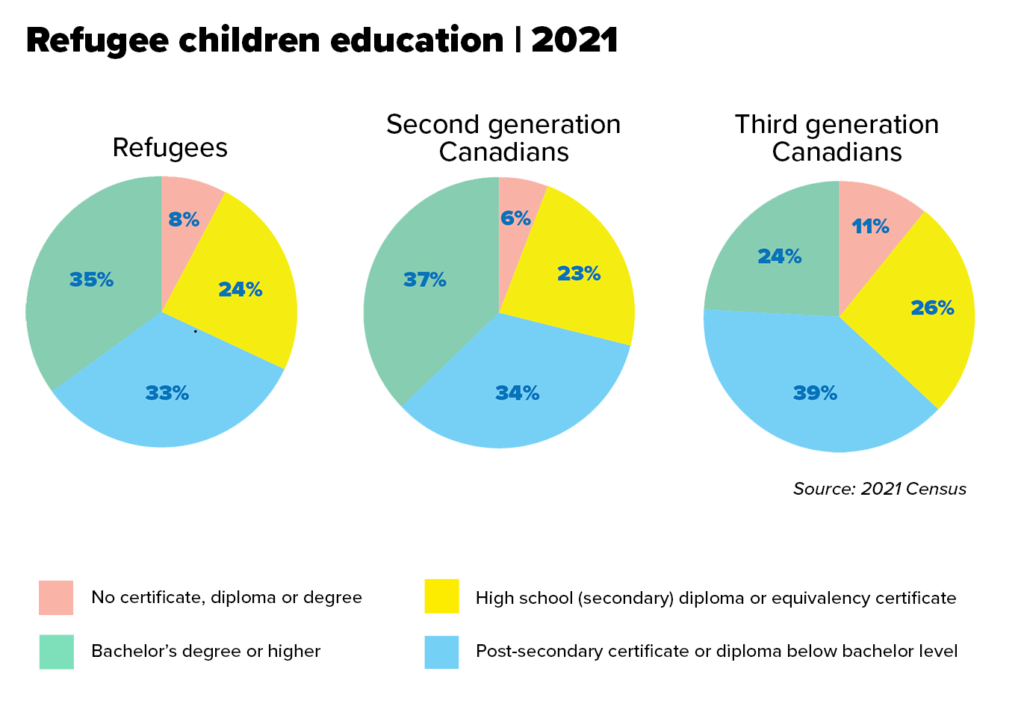
Education is a priority for refugees, with more than half earning a post-secondary certificate or higher. This equips them with the tools needed to contribute to Canada’s future. Refugees who arrive in Canada as children have post-secondary completion rates comparable to second and third generation Canadians.
Regional Connections provides services in multiple communities in rural Manitoba.
Regional Connections has 15 locations throughout Manitoba offering a variety of services.


Additional Programs: